
Should you consider seeing a pelvic floor physical therapist?
By Boston Area Doulas Owner / Manager, Jane Gajsiewicz
There's a recent commercial I saw when watching my weekly (let’s be honest, more like daily) dose of reality tv to unwind. It was for Poise and featured Katherine Heigl of Grey’s Anatomy fame. Essentially it shows Katherine offering a mom with an elementary school aged child Poise pads to protect her from light bladder leakage in early menopause. On the one hand, I thought great - they are breaking the stigma of leakage a bit and making it easier to talk about. Considering this is something over 50% of women experience, why is it taboo to speak about!? On the other hand, I was irritated, because it also sends a message to women that we should just deal with it, accept the fact that we might leak when we laugh, or sneeze, or cough too hard for the rest of our lives, and just buy Poise to protect our clothes. I wish Poise followed up the commercial with a quick ad for Pelvic Floor PT - but clearly I am not an ad exec.
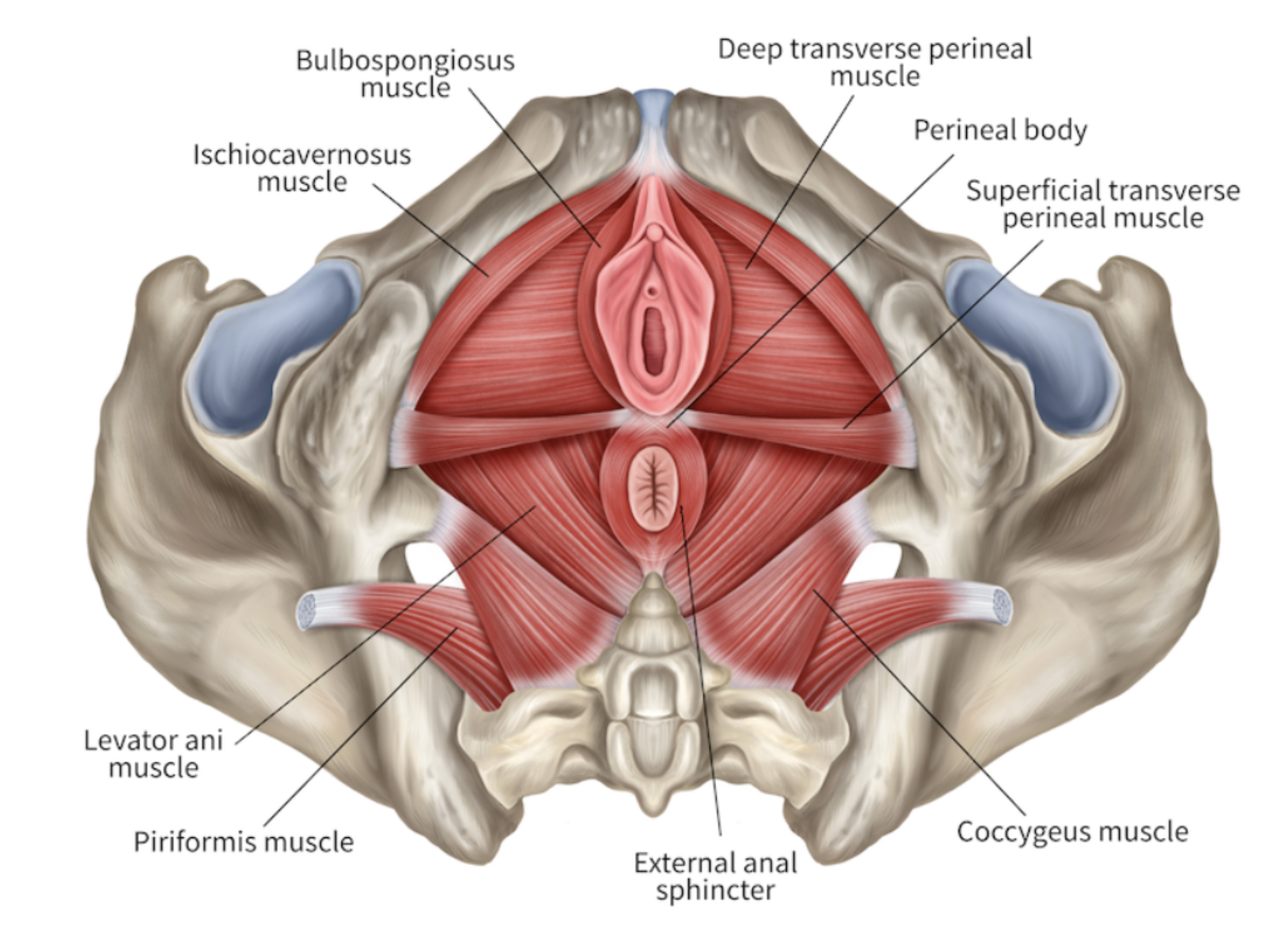
So what the heck is the pelvic floor? Your pelvic floor is a group of muscles and tissues that essentially form a sling of support between your pubic bone and tail bone. The muscle group has many important jobs, and we often don’t think about it until it becomes less functional. The pelvic floor is essential for basic everyday functions like peeing, pooping and enjoying sex. Function is based on both strength and flexibility. For a long time women were told to just do kegel exercises to tighten their pelvic floor before or after birth or when approaching menopause. This misses a key component, as it's often not the tightness of the pelvic floor that is causing issues, but the fact that it is TOO TIGHT and lacks flexibility and the ability to quickly and rapidly contract and respond when needed. We train all of our other muscles at the gym - why not also focus on the pelvic floor!?
The Pelvic Floor and Pregnancy
For pregnant people the pelvic floor plays an important role and it needs to flex into functions it hasn’t performed before. It essentially supports the growing uterus, and all of the other muscles and tissues around the baby bump. Pregnancy is a wild experience. Symptoms can range from heart burn to insomnia to the lovely “lighting crotch”. It takes about ~40 weeks to grow a baby and it changes your body in different ways.
Postpartum recovery is hard, and it’s hard to know what is normal and what means to be fully “recovered”. Pregnancy and postpartum are often depicted as magical times that bring nothing but joy and more love into the world. Don’t get me wrong, babies are magical and amazing, and becoming a parent is life changing and does send so much additional love into the world - but there are parts of pregnancy and postpartum that are less talked about and should be! Once of those is the physical toll pregnancy can take on your body, and we need to have access to the right tools and support systems to recover. During pregnancy we can experience (to name a few): SI joint pain, lower back pain, urinary leakage, and constipation. Postpartum we can experience (again to name only a few) urinary incontinence, pelvic organ prolapse, diastasis recti, labor and delivery trauma, scar pain, back or neck pain, rib pain, headaches, and constipation. These are not things that you should just be expected to “deal” with, especially when there are experts who can help!
I’ll tell you a bit of my own story. This is a long story - but I have a point, don’t worry! I tore my MCL skiing when I was 28. I had to go to ski patrol, get x-rays, was given a brace and showed how to keep weight off my leg with crutches. Once I was back in Boston, I was referred to an orthopedic surgeon who assessed my condition and referred me to PT. Once in PT, I was given specific exercises over the course of 12 weeks to build back my strength and protect my knee, and eventually was able to walk and then workout without the brace.
I felt supported and I had a place to go to ask questions if what I was feeling was normal. Flash forward four years and I was pregnant with my son. I did not see a pelvic floor PT during my first pregnancy. I was working out semi consistently, doing prenatal yoga and following the Body Ready Method, so I felt like I was set. My labor was an interesting experience as my water broke, but my body wasn’t really ready to be in labor. Long story short: I was in labor for about 28 hours, pushed for about 3 and ended up needing an emergency C-section. That was just a bit of trauma for me and my pelvic floor. So after that experience, I was expecting the same level of support I received after injuring my knee, but it actually took a full 24 hours for anyone in the hospital to even tell me to hold a pillow against my stomach to brace before coughing, sneezing, or laughing. Luckily, a friend who had also had a c-section had given me the great advice to bring a belly band, and wear it in the car on the way home to feel more stable in general (I highly recommend this!). Essentially you are discharged after a major surgery without being given many instructions, if any, to ensure your body properly heals. For the longest time, I was honestly scared to really even touch my c-section scar. It healed fine and was barely visible on the outside, but it felt so thick and strange when I touched it. I was also dealing with some leakage, but again I had heard jokes from older women for years, that after kids - your body changes and just leaks. I got pregnant with my second in December 2025, and finally worked up the courage to see a pelvic floor PT. In the back of my mind, I couldn't help but second guess myself - were my symptoms severe enough to need this? Is the process just another awkward, uncomfortable anxiety inducing internal exam? After my first visit, I realized I should have gone sooner.
How do you know if you need to see a pelvic floor PT? When is pelvic pain considered a problem, is leaking when you cough or laugh something that you can fix? Luckily, the answer is simple. Every pelvic floor PT I speak with says the same thing - “every pregnant person should see a pelvic floor PT!” You may not have any loss of function, but it is still worth learning about these muscles and how to protect them and maintain their key function, and prepare for the most successful labor and delivery or recovery you can. Even if you are 2, 3, 4 years etc postpartum, seeing a pelvic floor PT can help you deal with / resolve any ongoing symptoms.
What is Pelvic Floor Physical Therapy?
Analysis of gait, posture, strength and flexibility with a focus on symptoms that relate to pelvic floor dysfunction
Internal exam - gentle, manual assessment of the pelvic floor muscles to evaluate muscle strength, flexibility etc. Performed by using one gloved, lubricated finger inserted vaginally (or anally in some cases). Unlike a gynecological exam with your OB of midwife, there are no stirrups or speculums involved
If you are pregnant, your PT will likely want sign off from your OB / midwife before performing an internal exam
Internal exams are NOT required. You are in control - a lot of helpful therapy can be accomplished without internal exams, so let your provider know what feels right for you
Similar to conventional PT - you will get exercises to perform at home to build your strength and flexibility
For me - progress is slow but steady, but even better understanding how these muscles works is really helpful and empowering
If you are experiencing any symptoms related to pelvic floor dysfunction - you are not alone! We have a great list of Pelvic Floor Physical Therapists around the Boston Area - reach out and we are happy to share! Asking your OB or midwife is also a great option! Two notes
Men have a pelvic floor too and may need to see a pelvic floor PT for loss in function or injury.
Pelvic floor PT can be essential to help other symptoms - chronic pelvic pain, vulval pain, painful intercourse, endometriosis, interstitial cystitis / painful bladder syndrome etc.
Disclaimer: Doulas are not medical personnel and do not diagnose, perform any medical exams or clinical tasks. Information presented above is not intended as a substitute for the medical advice of a properly licensed health care professional.