
Lets talk about intrusive thoughts
By Boston Area Doulas Founder - Kathleen Stern
Like many of you, I've been thinking about the Clancy trial this summer.
It's stirred up hard but necessary conversations about maternal mental health, postpartum illness, how our legal system handles these cases, and just how complicated it all is.
This story is especially heavy for local parents and expectant families. You may be wondering: if I have intrusive thoughts about my baby, does that mean I'm at risk for developing postpartum psychosis? Can I prevent intrusive thoughts? Why do these thoughts happen?
We know that mental health is rarely simple. This post clarifies what intrusive thoughts are, why they happen, and what you can do about them.
Intrusive thoughts are common and, by themselves, are not the same as postpartum psychosis.
Intrusive thoughts are common. New parents very commonly experience unwanted, intrusive thoughts about their baby being harmed, including by their own hand, entirely by accident. These thoughts are "ego-dystonic," they go against what you believe or value about yourself, causing distress or discomfort. It's like feeling troubled by thoughts or urges that don't fit with who you think you are.
Postpartum psychosis is rare, a psychiatric emergency. It involves a break from reality: delusions, hallucinations, confusion, and often a loss of insight into the fact that anything is wrong.
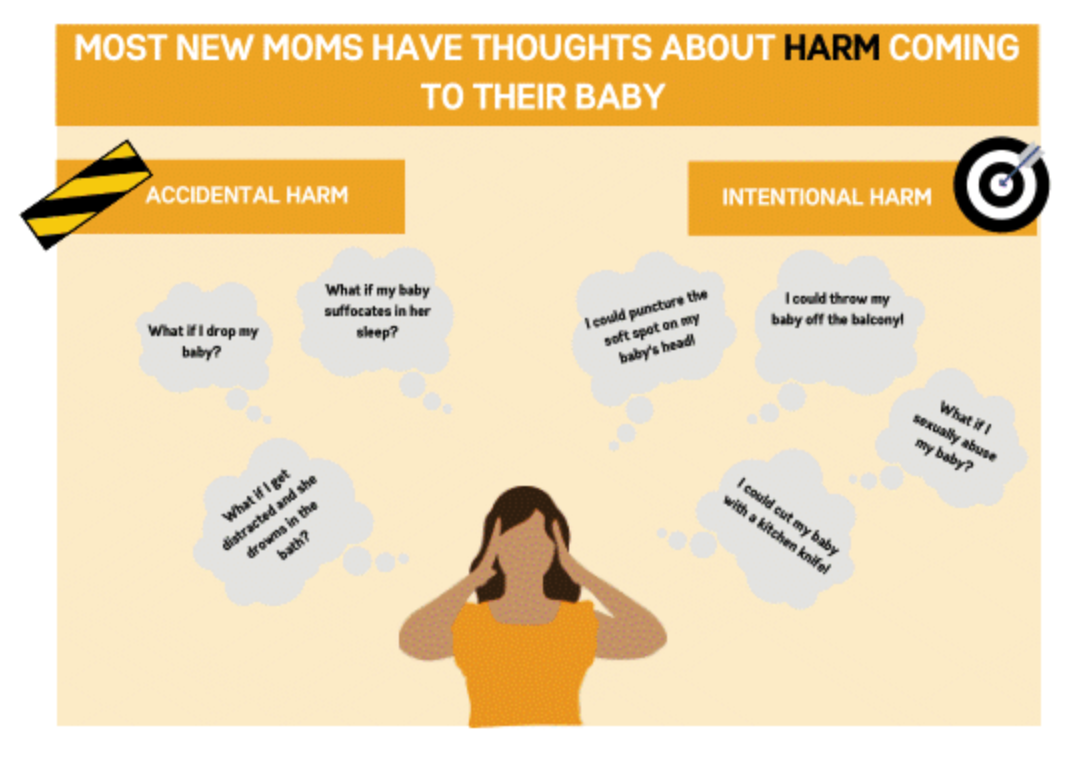
PLEASE take 3 minutes to read the rest of this infographic that breaks down unwanted, intrusive thoughts: what they are, how they're very common, why they happen, and when to seek help for them.
The Perinatal Anxiety Research Lab created this infographic to make these kinds of thoughts less frightening to those who experience them, and to reduce the risk that they may develop into a mental health challenge.
If you or a loved one is experiencing a mental health emergency, please dial 988.